Table of Content
- What Do You Think Is The Significance Of The Home Insurance Building In Chicago?
- Famous quotes containing the words home, insurance and/or building:
- The World’s Tallest Building In 1884: The Home Insurance Building
- Constructed in 1884, the Home Insurance Building in Chicago was the world’s first skyscraper
The building, which is an icon of Chicago’s skyline, is still used for commercial purposes today. It is an important part of the city’s history and serves as a reminder of its role in the evolution of architecture. The Home Insurance Building was completed in 1885; it originally had 10 stories and stretched 138 feet in the air. During its construction, city authorities were so worried that the building would topple over that they halted construction for a period of time so that they could ensure its safety. In 1890, two additional floors were added at the top, bringing the total height to 180 feet . In addition to being the first of a new generation of steel-framed skyscrapers built in cities across America and the world, the building set the standard for various other building innovations, including rapid, safe elevators, wind bracing and modern plumbing.

Levine & Co., stated that all the several thousand tons of metal brought to his company’s yards is in first class condition as far an he can find. “So far as the metal work Is concerned the Home Insurance building could have remained standing until doomsday.” Mr. Clonick said. A committee was appointed some time ago to make a thorough study of the Home Insurance building and its findings will not be made known until the last brick has been carried away. However, some authorities assert that the results to date indicate that the Home Insurance claims to be the first skyscraper very likely will be substantiated. Elevators were already invented at this time, and were implemented in the building. These elevators seemed like relatively new technology at the time, but were very slow and clunky compared to elevators today.
What Do You Think Is The Significance Of The Home Insurance Building In Chicago?
Though New York would later become known for taking skyscrapers to new heights, Chicago has retained its title as the birthplace of the skyscraper, thanks to Jenney and the rest of the Chicago School. The first of these historic buildings, Jenney’s Home Insurance Building, was demolished in 1931 to make way for the Field Building . Steel is. found in the upper three stories, which were added some time after the main building was completed.

The French engineer in charge was a dandy, always scrupulously dressed, and one day, while he was attired in white, a big sow knocked him over. In his anger he declared he would not remain in that place and, putting Jenney in charge, he left. It was during his years of life in the Latin quarter that he introduced pumpkin pie into Paris. Busque had a little café in the Rue St. Pierre, where the students gathered, and where Jenney was one of the leading spirits.
Famous quotes containing the words home, insurance and/or building:
A beautiful feature of the great general offices and the landings leading thereto is the equipment of ornamented glass, and throughout the building the doors and transoms have been treated in a similar artistic and finished manner. This work represents the well-known Western Sand Blast Company, northwest corner of Clinton and Jackson streets, Mr. Edwin Lee Brown President, a manufactory that is the recognized headquarters for fine execution in this line, the firm making a particular feature of glass signs and sand blast and embossed glass. In the mantels and fire-places is represented the Butler Company, Michigan avenue and Adams street. They supplied the tiles, not only of the hearths, but for all the floors of the vaults.

This was in stark contrast to earlier structures, which were supported by heavy masonry walls. Steel was not only lighter than brick, but it could carry more weight. With this new method of construction, lighter masonry walls could be “hung,” a bit like curtains, from the steel frame. As a result, the walls of the building didn’t have to be as thick, and the structure could be much higher without collapsing under its own weight. Buildings with this type of frame could also have more windows, as the steel frame supported the building’s weight and the stone or brick exterior merely acted as a “skin” to protect against weather.
The World’s Tallest Building In 1884: The Home Insurance Building
If he liked a student in his office or a draftsman he would stop his work and spend an hour or two teaching, instructing, explaining. He was a naturak teacher, able to impart his own knowledge to others, and his success in this line is evinced by the fact that scores of men who now are at the head of the architectural profession in America were trained under him. Yet, except among architects and builders, he was little known in Chicago. Possibly he was as well known in Berlin, London, Vienna, Paris—in any great city—as he was in his own. Architects and builders from all over the world came to him to learn—and were taught.
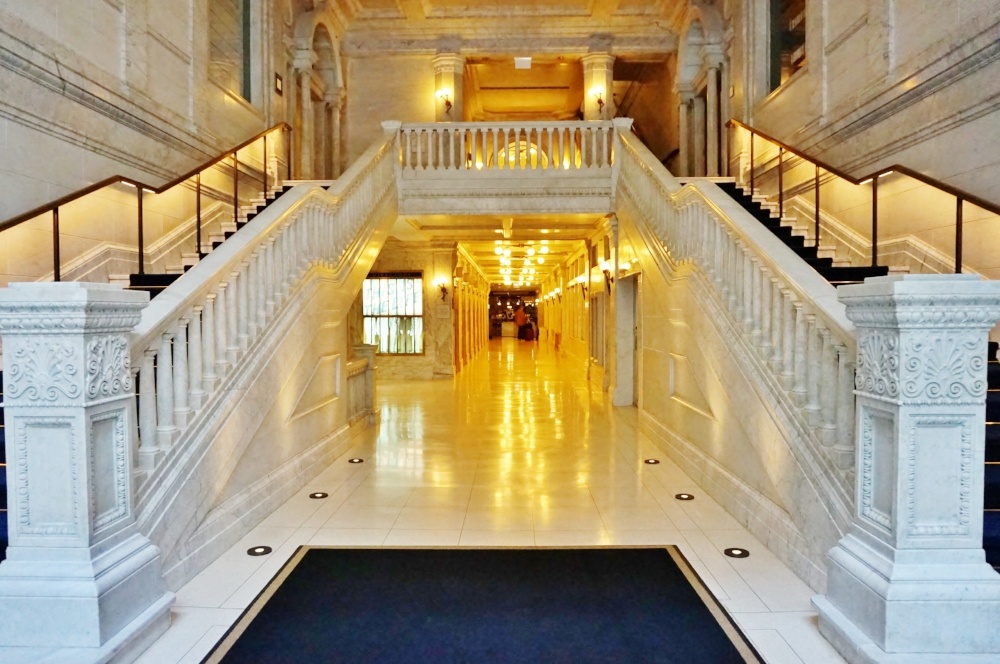
In 1885, the Washington Monument was completed, rising 555 feet into the air. The Home Insurance Building was eventually demolished in 1931 to make way for the Field Building, now known as the LaSalle Bank Building. There was a complete skeleton framework, floor loads were carried by both interior and exterior columns, wall loads were transferred to columns and columns were supported on independent footings. The first skeleton construction building ever erected was the Home Insurance building, which still stands as a model of that kind of work at Adams and La Salle streets. In 1931, the giant Sears, Roebuck, & Co. leapt into the insurance business with the creation of Allstate Insurance Company, based on the novel idea of selling auto insurance policies bymail order. Recipients of the Sears catalog could simply clip a coupon from the book, mail it in, and receive an auto insurance policy by return post.
Company
However, as a general rule of thumb, you should consider getting a life insurance policy that is worth at least 10 times your annual salary. If you have dependents, you will need to factor in their needs as well. The word skyscraper, in its architectural context, was first applied to the Home Insurance Building, completed in Chicago in 1885. A controversy was definitely ended yesterday by Thomas E. Tallmadge, chairman of a committee appointed by the Marshall Field estate to decide which was the actual “first skyscraper,” the Tacoma building, completed in 1888, or the Home Insurance building, finished three years earlier, in 1885. Mr. Jenney came to Chciago in 1867 and started as engineer and architect, later forming the firm of Jenney, Schermerhorn & Bogart, the last named later being one of the most famous landscape men in the world.
Between 1913 and 1930, New York City’s MetLife Tower was the world’s second tallest building. The Woolworth Building, which stood as the tallest structure in the world from 1913 to 1930, was surpassed by the Wall Street Building in New York City in 1930. The Empire State Building surpassed the Chrysler Building in 1931 as the world’s tallest building, which stood from 1930 until 1931. Following the Great Chicago Fire of 1871, a boom of new construction would revitalize the city’s economy and completely transform its skyline. Instead of wood, the new buildings going up in Chicago were made largely of stone, iron and steel, a relatively new material. The Home Insurance Building, located at the corner of Adams and LaSalle Streets in the Loop, Chicago’s business district, became a leading example of this era of new construction.
An example is the Ditherington Flax Mill in England, but it was only five stories tall. The Broad Street Station in Philadelphia, a six-story building designed by Wilson Brothers & Company built in 1881, had a structural steel frame and was one of the first buildings in America to use masonry not as structure, but as curtain wall. But at only six stories, it was not considered the world's first skyscraper. Chicago and New York each had some lower height structures using iron framing, but they were not fireproof. Later buildings in Chicago were able to solve these problems by supporting the external masonry entirely on the iron frame, which later became the standard worldwide.

Such construction must be elastic, as settlements must take place, and although every care is taken to make settlements uniform, there will be more or less inequality, and to counteract these there must be elasticity in the construc? It is also necessary to have all rooms as well lighted as is possible, and this is mainly accomplished by having the piers cut away to the mini? Ried on square iron columns built into the brick piers and connected at the top of each window by lintels. The interior, including all the iron columns, girders, beams, etc., will be fireproofed by the system of hollow fireclay tile arches, partitions, etc., placed by the Wight Fireproofing Company. Woods, and the exterior balconies, the balustrade on the roof, etc., will be of elaborate magnetic oxide ironwork, a material especially adapted for these purposes, by Poulson & Edgar, of Brooklyn.
He was told to provide the maximum number of small offices above the second floor. He saw at a glance that neither brick nor stone would carry the load per unit of section. Architects often had built iron columns into masonry piers where the load was exceptionally great, and Mr. Jenney had done the same thing in the Fletcher & Sharo building at Indianapolis. The material solution of the problem was to make this construction general, and inclose an iron column within each of the small masonry piers, thus satisfying the three requirements—small piers, strong and fireproof.

The fact that some of these elements existed in a rather primitive state, and the framework did not conform to our modern ideals of rigidity, should not be allowed to effect our judgement of a courageous and credible undertaking. We fare, therefore, in complete accord in recognizing the Home Insurance building as the first tall structure of metal skeleton construction. While architects, engineers, building experts and material men pick away at its sturdy old frame, examine every nook and cranny, take notes and collect bits of its body, what is possibly one of the most significant buildings In the world is fast disappearing from the sight of man. This is the famous old Home Insurance building at the northeast corner of Adams and La Salle streets, which wreckers are now engaged in reducing to a memory. The columns in the Home Insurance building were cast iron, The riveted columns of plates and angles and others were at that time thought too expensive. It was in this building that the first Bessemer steel beams were used.




No comments:
Post a Comment